Case Study β€” 2026

Designing, Building & Optimizing a Career Coaching Platform β€” From Figma to Production

πŸ‘€ Client Name
Lười Đi Lẑc team
πŸ—“οΈ Timeline
May 20, 2026 → July 6, 2026
πŸ”— View Live Site
πŸ“„ Description

Lười Đi LαΊ‘c is a Vietnamese career coaching platform helping job seekers navigate career transitions through structured guidance and community support. As solo designer and frontend implementer, I own the entire web experience β€” from the Figma design system to WordPress/Elementor implementation, performance optimization, and marketing automation β€” for a platform currently serving 200+ students and 2,000+ followers.

🏷️ Industry
Career Coaching Platform
πŸ› οΈ Tools
Figma WordPress Elementor HTML/CSS/JS Make.com GA4 Hotjar
πŸ‘₯ Role

Solo UX/UI Designer & Frontend Implementer β€” WordPress/Elementor build, performance optimization, marketing automation

diagnosed.log
optimization in progress
  • πŸ”Diagnosed (July 2026): 12.94% dead-click rate, INP at 340ms β€” root-caused to Elementor/plugin script overhead
  • 🎯81/100 Performance Score at time of audit β€” via Microsoft Clarity
  • πŸ“ŠBuilt full measurement stack from zero β€” GA4 + Clarity + Hotjar β€” for a platform with no prior analytics
  • πŸ“ŒStatus: Optimization fixes in progress
Problem

Lười Đi LαΊ‘c's entire presence lived on bio links and social tools β€” no owned website, no place to sell templates, courses, or coaching, and no foundation to scale.

Opportunity

The team needed one trustworthy site to handle three transaction types β€” templates, courses, and coaching bookings β€” and open the door to faster growth. As sole designer and implementer, I owned it end-to-end, from architecture to measurement.

Solution

I built a WordPress platform end-to-end: IA for three offerings, a scalable Figma design system, WooCommerce for real transactions, and a self-instrumented analytics stack (GA4, Clarity, Hotjar) β€” the platform's first ever.

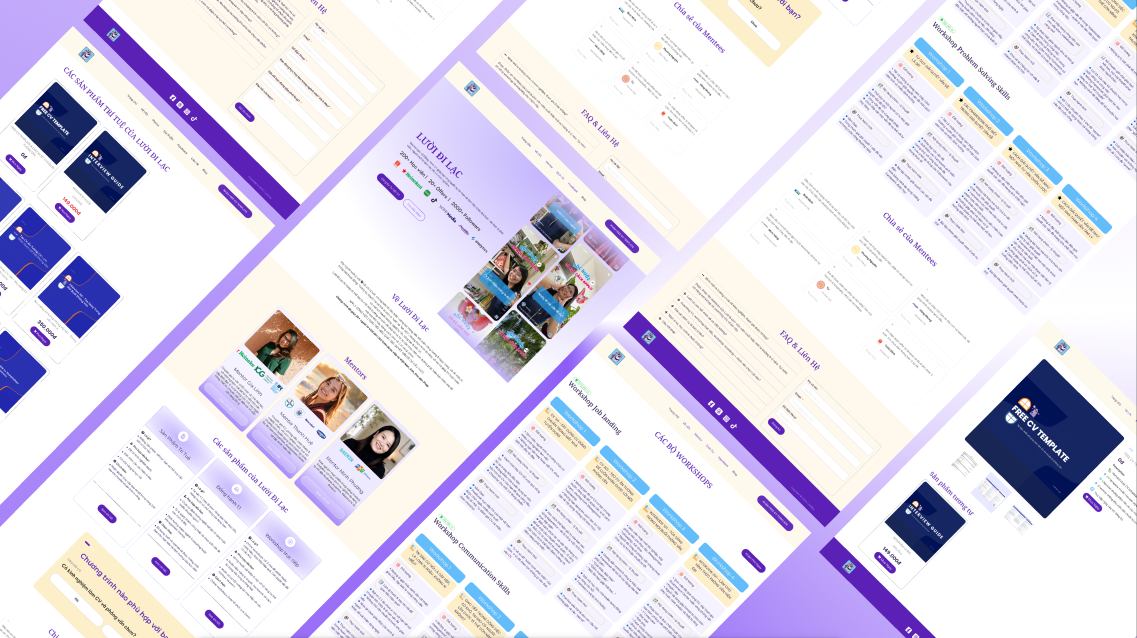
Design Layouts

Lười Đi Lẑc

What I Learned

  • I jumped straight to high-fidelity Figma without wireframing the IA and navigation flow first β€” which meant structural gaps only surfaced late, forcing me back and forth between high-fi and structure until it got messy enough to stop and redraw the flow from scratch. Now I lock IA, navigation, and flow at wireframe level first β€” it's where both I and the client can validate structure early, before it's expensive to change.
  • Learned to actively manage the timeline itself β€” deciding when to run design and implementation in parallel versus sequentially, based on which parts of the site actually had room for that trade-off.
  • Built the habit of learning and working fast under real constraints β€” not stalling on unfamiliar tools, but finding a way to make the product work and then improving it.
  • With no time to run structured usability tests (Maze, etc.) mid-design, I set up GA4, Microsoft Clarity, and Hotjar to validate decisions after launch instead β€” learning to read real user behavior as a substitute for pre-launch testing I didn't have time for.
↑ Back to top